
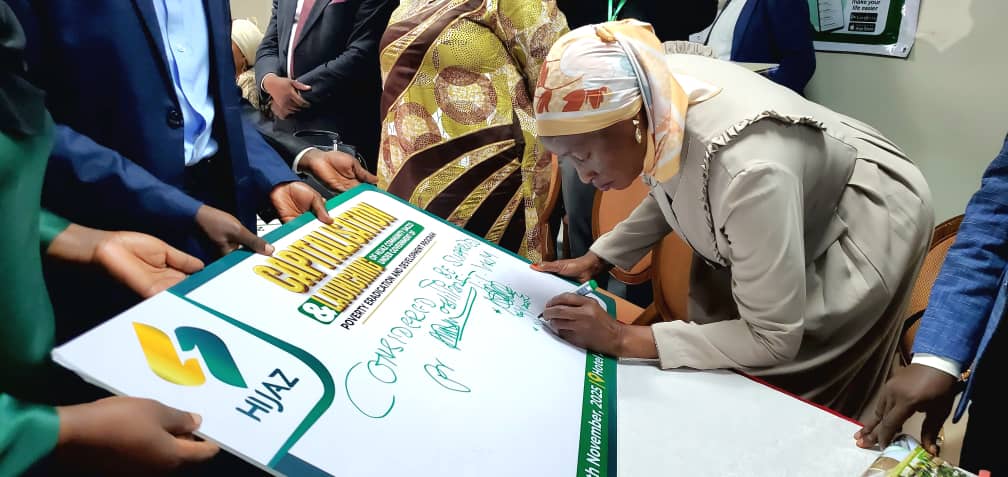
Hijaz Community Sacco has unveiled a social empowerment initiative aimed at uplifting widows, orphans, and youth through Sharia-compliant microfinance services. The programme seeks to promote financial inclusion and self-reliance among Uganda’s Muslim communities.
Radhia Nalwanga, the Managing Director of Hijaz Sacco, said the initiative fills a long-standing gap in access to financial services and education for Muslims, particularly women left behind by traditional systems.
“Many widows are left with many children and no income,” Nalwanga said during the Sacco’s launch at Hotel Africana. “Hijaz is here to restore their dignity.”
She added that the Sacco will empower such groups with savings opportunities and access to interest-free credit guided by Islamic principles. Hijaz currently has over 5,000 members across Uganda, the majority being women.
“We have secured 500 bursaries from the Office of the Senior Presidential Advisor on Converted Education, with four scholarships already awarded for ICT courses this holiday,” she noted.
The launch attracted hundreds of Muslims from Kampala and other districts, who were also trained on value addition, savings culture, and unity as tools for socio-economic transformation.
Robert Mbabazi, the Senior Presidential Mobiliser on Poverty Eradication and Development, commended Hijaz for promoting collective development, urging Ugandans to form organised groups as a pathway to prosperity.
“The government cannot easily support individuals, but when people unite under groups or Saccos, it becomes easier to empower them,” Mbabazi said.
“The only way to develop our country is to unite, share ideas, and focus on value addition.”
He added that the government’s Microfinance Support Centre remains a major channel through which organised community groups can access funding and technical support.
Kellen Musinguzi, a Welfare Officer from State House, encouraged Muslim women to embrace business growth through the Sacco model.
“A Sacco is not about saving and eating, but saving and multiplying,” Musinguzi said. “Muslim women are stepping into business, and this aligns with President Museveni’s vision of every Ugandan contributing to development.”
Sarah Kanyike, the Senior Presidential Advisor for Kampala Affairs, urged Muslims to take advantage of government programmes that support community-based groups.
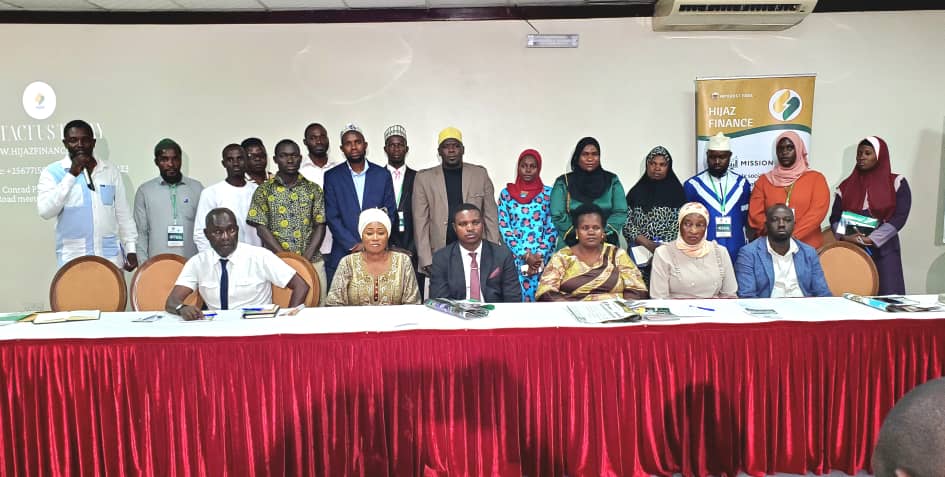
“We have been left behind as Muslims, but that should change,” Kanyike said. “Muslims, especially women, need to develop themselves and give a hand to their families and communities.”
She encouraged Muslims to form Saccos at mosque, parish, or village levels to tap into the Shs83 billion government fund set aside to support Muslim Saccos across 16,300 mosques nationwide.
One member, Ismail Mugume, expressed optimism that the initiative will bring tangible change.
“Our eyes are open this time round. Most of the time we do not benefit from government programmes because money meant for Saccos disappears in dirty hands before it reaches us,” Mugume said.
The launch marks a significant step in empowering Uganda’s Muslim community through Islamic finance, education support, and entrepreneurship.
Hijaz Sacco is registered under the Islamic Savings and Credit Cooperative Organisation in Uganda and focuses on providing Sharia-compliant financial services, supporting Hajj (pilgrimage) affordability, and promoting socio-economic transformation.
